Carlo Ancelotti: The Master Tactician’s Enduring Legacy
- Introduction: Delving into the World of Don Carlo
- From Midfield Maestro to Managerial Prodigy: Ancelotti’s Playing Days
- A Global Journey: Ancelotti’s Path Through Europe’s Elite
- The Ancelotti Approach: More Than Just Tactics?
- Defining an Era: Ancelotti’s Impact at Real Madrid
- Quiet Authority: Understanding Ancelotti’s Man-Management
- Navigating the Storm: Ancelotti and the Catalan Challenge
- The Enduring Legacy of Carlo Ancelotti
Carlo Ancelotti: The Master Tactician’s Enduring Legacy is a phrase that perfectly encapsulates the career of one of football’s most respected figures. Honestly, whenever I think about managers who have truly left their mark on the sport, Ancelotti is always near the top of the list. He’s not just a coach; he’s a footballing institution. With a career spanning several decades, both as a player and a manager, he has achieved remarkable success at the highest level, demonstrating an impressive ability to adapt and thrive in different environments. His calm demeanor and tactical intelligence have made him a revered figure in dressing rooms across Europe.
From Midfield Maestro to Managerial Prodigy: Ancelotti’s Playing Days
Before gracing the touchline, Carlo Ancelotti was a formidable presence in the midfield. Known for his intelligence and awareness of the game, he enjoyed a successful playing career in Italy. He started his professional journey with Parma in 1976, helping them achieve promotion to Serie B. His talent quickly became apparent, leading to a move to AS Roma in 1979. At Roma, he won a Serie A title in 1983 and four Coppa Italia trophies.
Perhaps his most significant period as a player came with AC Milan, whom he joined in 1987. As part of a legendary Milan side, he secured two European Cups (now the UEFA Champions League) in 1989 and 1990, along with multiple league titles. Winning the European Cup as a player is a significant achievement, and it’s something only a handful of people have managed to repeat as a manager.
Ancelotti retired as a player in 1992, but his deep understanding of the game, honed in the heart of midfield, set the stage for an equally, if not more, impressive career in management.
A Global Journey: Ancelotti’s Path Through Europe’s Elite
Ancelotti’s transition to management began as an assistant coach for the Italian national team before taking the reins at Reggiana in 1995. He immediately made an impact, guiding the team to Serie A promotion in his first season. This early success paved the way for moves to Parma and then Juventus, where he continued to develop his coaching philosophy.
The defining period of his early managerial career came at AC Milan, where he spent seven-and-a-half years. During this time, he won two UEFA Champions League titles (2003 and 2007) and a Serie A title, solidifying his reputation as a top-tier manager.
His journey then took him across Europe, managing some of the biggest clubs in the world, including Chelsea, Paris Saint-Germain, Bayern Munich, and Everton. He achieved domestic success in England (Premier League and FA Cup with Chelsea), France (Ligue 1 with PSG), and Germany (Bundesliga with Bayern Munich), making him the only manager to have won league titles in Europe’s top five leagues.
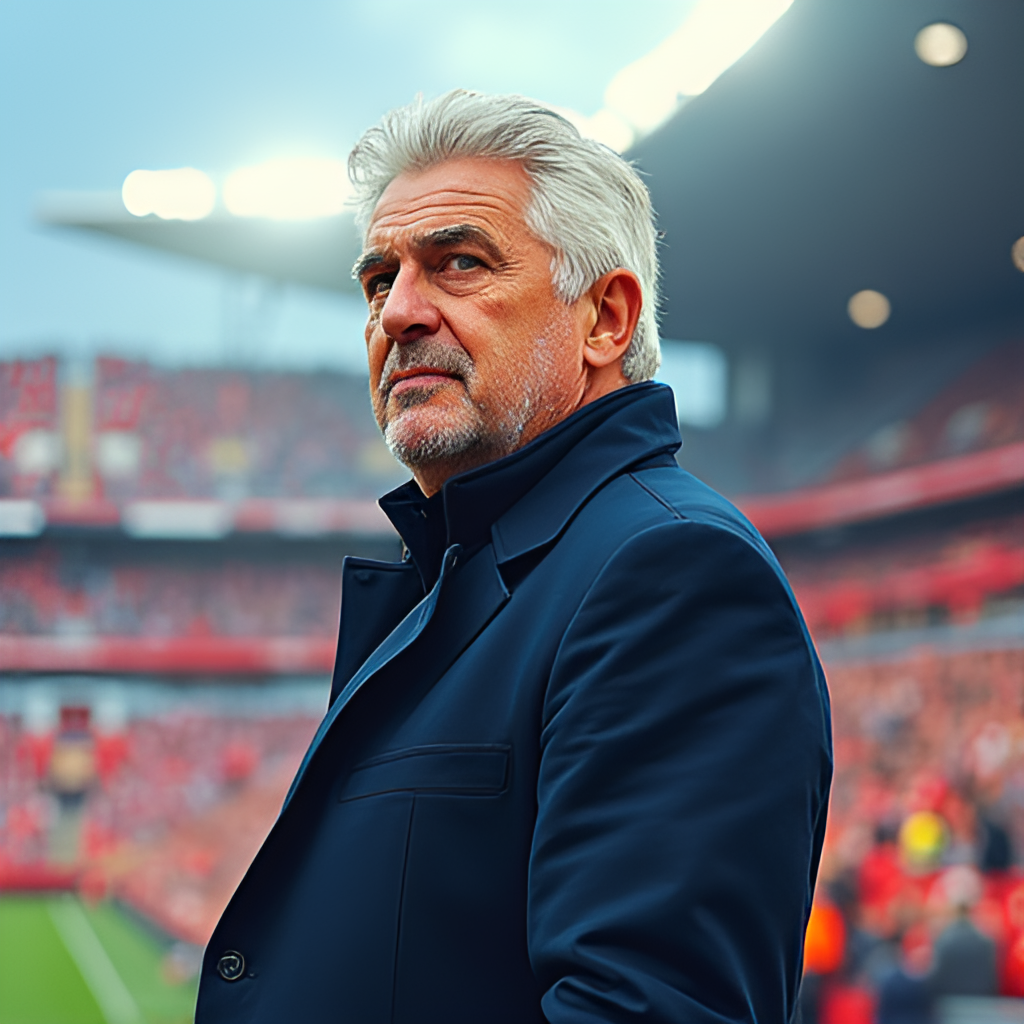
This image is a fictional image generated by GlobalTrendHub.
The Ancelotti Approach: More Than Just Tactics?
One of the most fascinating aspects of Carlo Ancelotti’s management is his tactical approach. While some managers are known for rigid systems and formations, Ancelotti is often described as more adaptable and pragmatic. He’s not afraid to change his system depending on the players available and the opponent.
His teams, such as Real Madrid, often employ a 4-3-3 formation, emphasizing build-up play, attacking prowess, and solid defense. However, he also values positional freedom and trusts his players’ offensive instincts. As he puts it, he doesn’t want to stifle the creativity of his world-class players by giving them too much information when they have the ball. This focus on empowering players and allowing for individual interpretation of the game is a key element of his philosophy.
While some might see this as a lack of tactical rigidity, I believe it’s a tactic in itself – one that prioritizes unleashing the full potential of his elite squads.
Defining an Era: Ancelotti’s Impact at Real Madrid
Carlo Ancelotti’s two spells at Real Madrid have been nothing short of historic. In his first stint, he led the club to their coveted tenth Champions League title (La Décima) in 2014, a moment etched in the memories of Real Madrid fans, including myself. He also secured a Copa del Rey title during this period.
His return to the Bernabéu in 2021 has been even more remarkable. He has guided Real Madrid to two La Liga and Champions League doubles (2022 and 2024), further cementing his place as one of the greatest managers of all time. He holds the record for the most Champions League titles won by a manager, with five to his name.
Under his leadership, Real Madrid has consistently performed at the highest level, showcasing a blend of tactical flexibility, player empowerment, and a winning mentality.
Quiet Authority: Understanding Ancelotti’s Man-Management
Beyond tactics and trophies, Carlo Ancelotti is widely praised for his exceptional man-management skills. Unlike some of his more animated counterparts, Ancelotti is known for his calm and quiet leadership style. He doesn’t believe in imposing his will but rather in convincing his players and fostering an environment of trust and respect.
He takes the time to understand his players as individuals, not just athletes, and empowers them by giving them responsibility and ownership of strategies. This approach, as highlighted in his memoir, focuses on inspiring greater performance by showing genuine care for their professional growth.
His ability to connect with and motivate world-class players like Cristiano Ronaldo, Zlatan Ibrahimović, and Karim Benzema speaks volumes about his interpersonal skills. He creates a relaxed atmosphere, even before big games, and is known for his humility, taking blame for defeats and giving credit to his players for victories.
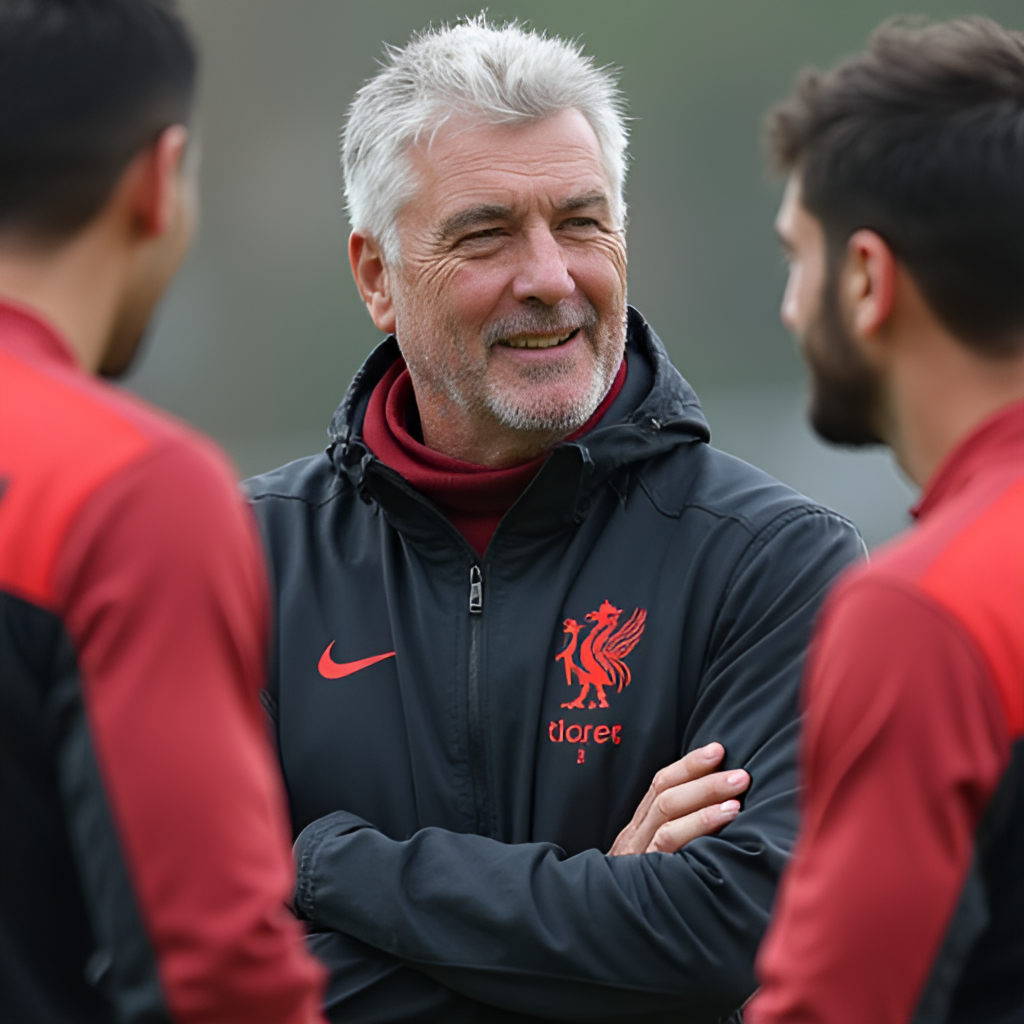
This image is a fictional image generated by GlobalTrendHub.
Navigating the Storm: Ancelotti and the Catalan Challenge
Managing Real Madrid inevitably means navigating the intense rivalry with FC Barcelona, the Catalan giants. This fixture, known as El Clásico, is always a test of nerve and tactics. While Ancelotti has enjoyed significant success overall at Real Madrid, recent encounters with Barcelona have been challenging.
In the 2024-2025 season, for instance, Barcelona secured victories against Real Madrid in multiple competitions, including La Liga, the Copa del Rey final, and the Supercopa de España final. These results highlight the competitive nature of this rivalry and the tactical battles that unfold between Ancelotti’s side and their Catalan opponents. Despite these setbacks, Ancelotti maintains a confident and serene demeanor, even occasionally engaging in playful banter with the Catalan press. It’s a reminder that even at the highest level, football is filled with passion and rivalry.
The Enduring Legacy of Carlo Ancelotti
Carlo Ancelotti: The Master Tactician’s Enduring Legacy is truly a fitting description for this footballing icon. From his successful playing career to his unprecedented managerial achievements across Europe’s top leagues, Ancelotti has consistently demonstrated his understanding of the beautiful game. His ability to adapt, his quiet leadership, and his focus on empowering players have set him apart. As someone who has followed football for years, witnessing Ancelotti’s continued success, particularly at Real Madrid, has been a privilege. His legacy extends beyond the numerous trophies; it lies in the respect he has earned from players, colleagues, and fans alike. The enduring legacy of Carlo Ancelotti is one of a gentleman of the game who achieved greatness through a blend of tactical intelligence and genuine human connection.